What’s next for AI in K–12?
AI is already part of teaching and learning. New research from MagicSchool and Hanover Research reveals how districts are approaching adoption, building trust, and evaluating AI for the future.

Responsible AI in K–12
Explore the findings, benchmarks, and practical guidance district leaders can use to understand where they stand and make informed decisions for the year ahead.
ADOPTION AND VISIBILITY
Guiding the next phase of AI in K–12
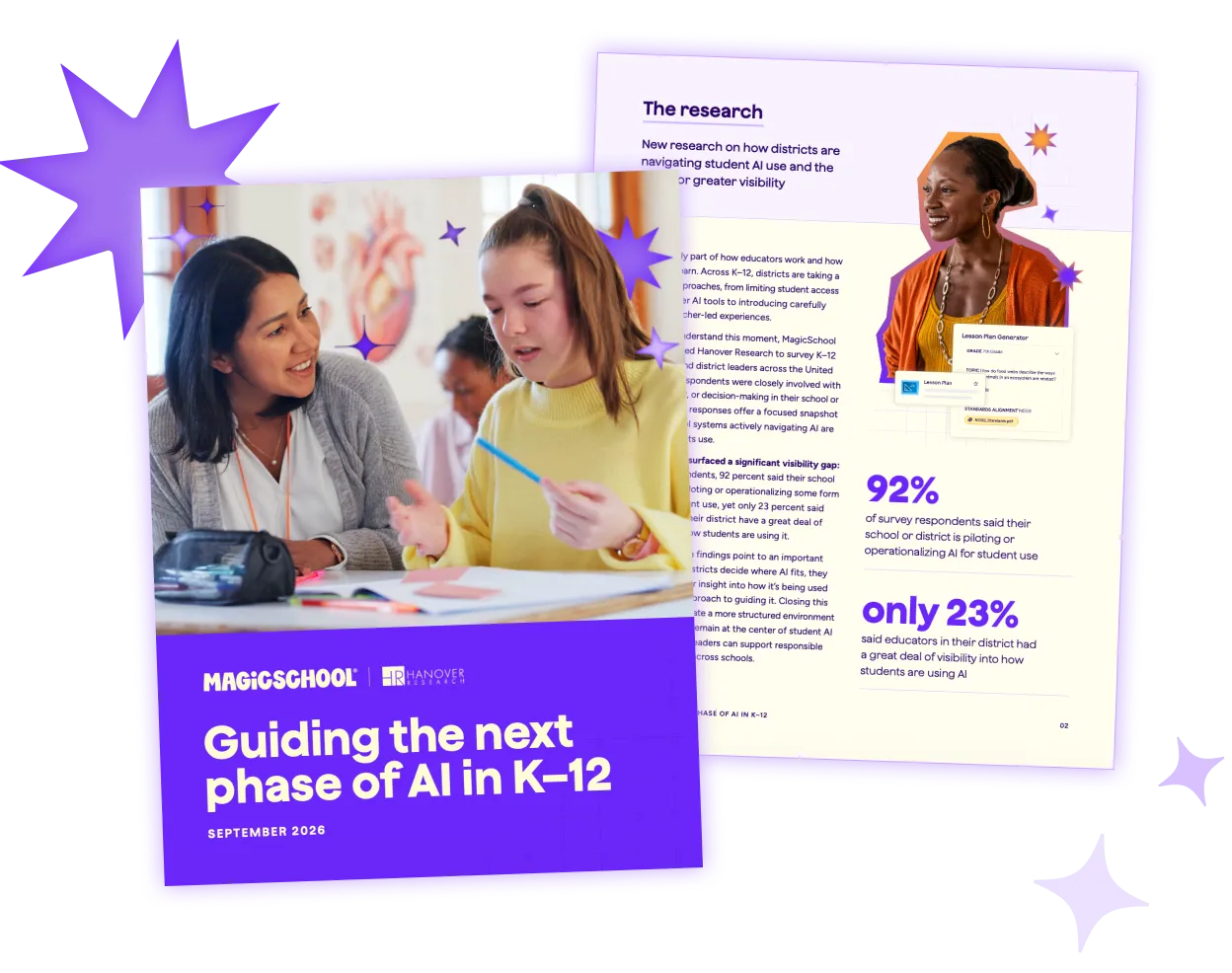
92 percent of respondents say their school or district is piloting or operationalizing AI for students, yet only 23 percent report a clear picture of how students are using it. Learn what’s behind the visibility gap and how districts can close it.

Coming soon in October and November

TRUST AND RESPONSBLE USE
Building trust in classroom AI
What gives educators confidence in classroom AI? This report explores the guidance, safeguards, and supports that help create a trusted environment for teaching and learning.

EVALUATION AND IMPLEMENTATION
Choosing the right AI solution for your district
As districts plan next year’s technology investments, AI evaluation is moving into focus. See what leaders are prioritizing as they assess their options.
Put responsible AI into practice
Find practical tools to help your district turn responsible AI goals into action.

Introduce AI one step at a time. Move from planning to classroom use while supporting educators and building AI literacy.

See how K–12 districts build AI strategies that ensure safety, align to goals, show ROI, and prepare teachers and students for responsible use.

Wherever you're starting, this checklist can help. Set goals, protect student data, and support teachers with practical next steps.
Progress guided by purpose
District leaders are creating a thoughtful path forward for educators, students, and their school communities.
"We want to be an innovative organization. If we don't try new things, we won't make forward progress."
Temecula Valley Unified School District
“When teachers feel supported and empowered to explore, incredible things can happen. Our teachers are thriving, and our students are shining.”
Eden Prairie Schools





About the research
MagicSchool partnered with Hanover Research to survey 550 full-time K–12 educators and education leaders across the United States. All respondents were closely involved with AI use, policy, purchasing, or decision-making in their school systems.
Their perspectives shape this three-part research series exploring how schools and districts are approaching AI adoption, trust, safety, student and staff use, and platform decisions. Together, the findings offer a focused look at responsible AI implementation across K–12.