How can school districts fund AI tools for education?

Explore how school districts can fund AI tools through existing budgets, federal and state programs, and grants, with practical tips for planning long-term technology costs.
School district budgets have a lot of ground to cover. Between supporting classroom technology, maintaining existing systems, and meeting the needs of students and educators, finding room for something new can be a challenge. As more districts explore how AI can support teaching and learning, they're also figuring out how to pay for it.
Fortunately, there are several funding options to explore. Funding school technology doesn't necessarily call for a new budget line or a dedicated source of AI funding. Existing district budgets, federal and state programs, and technology grants for schools may all play a role.
Let's explore where districts can find funding, what to consider, and how to make AI part of a sustainable technology budget.
What funding options can school districts use for AI tools?
School districts can fund AI tools through existing technology budgets, federal and state education programs, grants, and other external resources. The best fit depends on your district's goals, how you plan to use AI, and the requirements of each funding source.
Many of the resources districts already use for classroom technology, professional development, and instructional programs may also help cover AI tools. When exploring funding for technology in schools, it's worth taking a closer look at what's already available to your district.
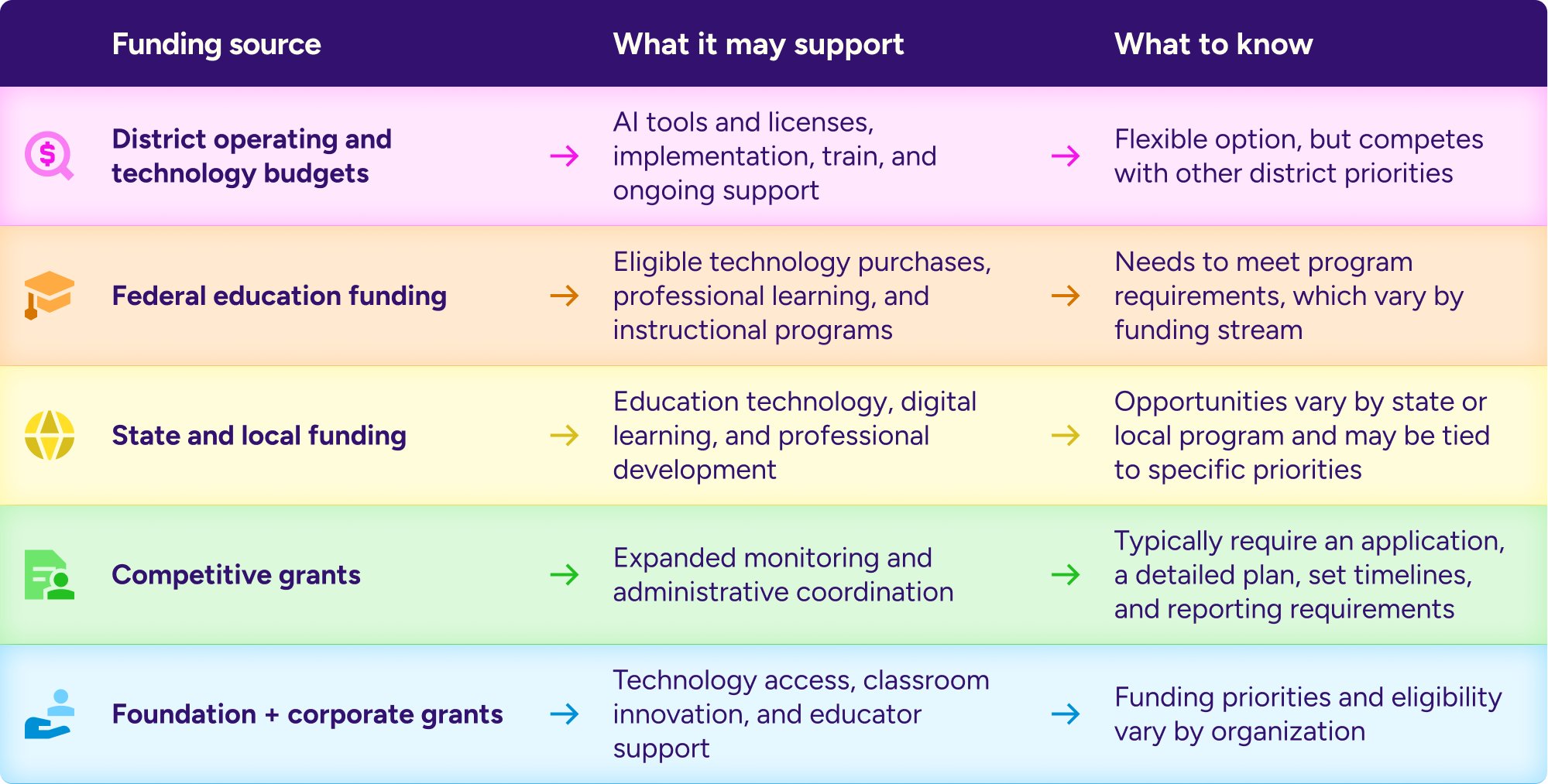
Different funding sources can also work together. For example, a grant might cover the initial rollout of an AI tool, while your district's technology budget supports continued access.
How can federal education funding support school technology?
Federal education funding for technology in school districts may help cover the cost of AI tools, educator training, and other technology-related expenses. Whether a particular expense qualifies depends on the funding program, the students it serves, and how the technology supports the program's educational goals.
If your district already receives federal funding, it's worth exploring whether AI-related expenses fit within your existing programs. Many federal programs are designed to help schools improve student outcomes, expand access to learning opportunities, and support educators.
A few programs to know:
- Title I, Part A: Supports schools with high numbers or percentages of students from low-income families. Certain technology expenses may qualify as part of an eligible plan to improve academic achievement.
- Title II, Part A: Focuses on improving educator and school leader effectiveness. Funding may support professional development that helps teachers use technology, including AI, effectively.
- Title IV, Part A: Supports well-rounded education, safe and healthy students, and the effective use of technology. Eligible activities may include digital learning, professional development, and certain technology purchases.
Keep in mind that funding for technology in schools may cover more than the technology itself. For example, a program might support professional learning that helps teachers use AI responsibly, even if it doesn't cover software licenses.
Your district's federal programs or grants administrator can help you sort through the details. They can clarify allowable expenses, documentation requirements, and how a proposed AI initiative fits within existing program goals.
Because federal funding rules can change, always check the latest guidance from the U.S. Department of Education and your state education agency before making funding decisions.
How can districts find technology grants and other external funding?
School districts can find technology grants for schools through state education agencies, government grant databases, private foundations, and corporate giving programs. The best place to start is with opportunities that match what your district hopes to accomplish with AI.
Start with your state education agency, which may offer grants for digital learning, instructional innovation, or professional development. Local community foundations and regional education organizations can also be valuable resources, especially if they already work with districts in your area.
Other sources worth exploring include:
- Grants.gov: This federal database lets you search for funding opportunities by category, agency, and eligibility. Look for programs that may support technology or related instructional needs.
- Education-focused foundations: National and regional foundations may fund projects that improve access to technology, strengthen teaching practices, or support new approaches to teaching and learning.
- Corporate giving programs: Some companies offer grants, technology resources, or other forms of support for schools. Look for programs focused on education, digital access, or educator development.
- District and professional networks: Fellow district leaders, education service agencies, and professional associations can help you discover education technology grants and hear firsthand how other districts have secured funding.
As you search, think about the work you want the funding to make possible. If your district wants to help teachers save time on lesson planning and create more personalized learning experiences, a grant supporting instructional technology or professional development may be a natural fit. A grant focused solely on purchasing student devices, however, may not help you reach that goal.
Your district's grants team or business office can be a great resource here, too. They may already have relationships with local organizations, experience with particular programs, or insight into opportunities on the horizon.
What should districts consider before using grant funding for AI?
Before using grant funding for AI, districts should understand what expenses are covered, what the grant requires, and how they'll sustain the investment once funding ends. A grant can be a great way to bring new technology into your schools, but it's worth looking at the full picture before committing.
Start with the fine print. Some grants may cover software licenses or technology purchases, while others focus on professional development, student access, or specific instructional outcomes. Even when a grant seems like a good match, you'll want to confirm that your district and its planned expenses are eligible.
There are a few important questions to ask:
- What's covered? Can you use the funds for AI software, teacher training, implementation, or ongoing support? Are there restrictions on how much can go toward technology purchases?
- What's required? Does the grant call for a detailed implementation plan, progress reports, documentation of expenses, or evidence of student outcomes?
- What's the timeline? When will funds become available, how quickly must they be spent, and does that align with your district's plans?
- What happens when the grant ends? Will your district be able to cover annual licenses, continued training, and other costs if the initiative is successful?
Understanding the cost of AI in education can help you plan ahead. Beyond the initial purchase, consider the time and resources needed for onboarding, professional learning, technical support, and potential expansion to more schools.
Before applying, bring your instructional, technology, and finance teams into the conversation. They can help confirm that the proposed use of funds meets the grant requirements and that your district has the resources to implement and support the tools.
How can districts build a sustainable funding plan for AI?
A sustainable AI funding plan starts with your district's instructional priorities and a clear picture of the resources available. By bringing AI into your existing budgeting process and planning for ongoing costs, you can make investments that continue to serve educators and students beyond the first year.
Think about where AI could make the biggest difference in your schools. Maybe your teachers are spending too much time on administrative tasks, or your district wants to give educators more ways to differentiate instruction. Those needs can help guide which tools you invest in, how you introduce them, and where you allocate funding.
You may find that different funding sources make sense at different stages. A grant could help cover an initial rollout or professional development, while existing district funds support ongoing access. Working with your finance and technology teams early can help you understand how those expenses fit into future budget cycles.
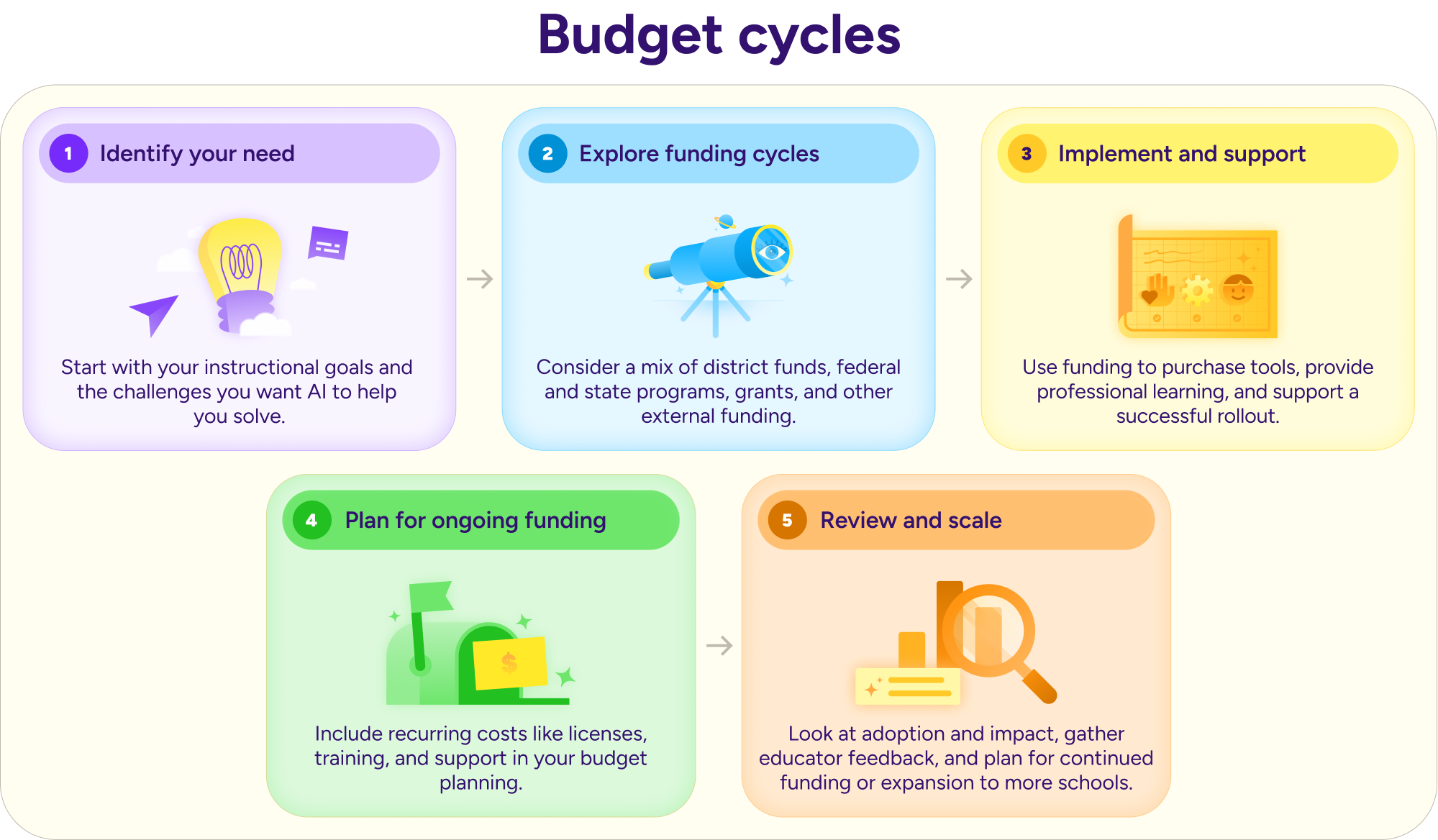
As educators begin using AI, pay attention to what's working. Look at adoption across schools, gather teacher feedback, and consider whether the tools are delivering the value you expected. That information can help you decide whether to renew, expand, or adjust your investment.
Over time, AI tools that prove their value can earn a place in your district's regular technology budget. That might mean reallocating funds from tools that are no longer meeting your needs or planning for AI expenses in future budget cycles.
For a closer look at how to evaluate costs, set priorities, and plan your investment, explore our guide to budgeting for AI in education.
How MagicSchool supports districts planning for AI adoption
Once you've identified potential funding sources, the next step is finding AI tools that meet your district's needs and that educators will use.
MagicSchool is built specifically for K–12 education, with AI tools that help teachers save time on lesson planning, differentiation, assessments, and more. Educators using MagicSchool report saving more than seven hours each week, giving them more time to focus on their students.
For district leaders, MagicSchool offers the visibility, administrative controls, and professional learning resources needed to support AI adoption across schools. Districts can also create and share custom tools that reflect their instructional priorities, helping make MagicSchool useful for their educators.
For districts making a long-term investment in AI, that combination of educator tools and district-level support can help make adoption more manageable across schools.
Ready to explore MagicSchool for your district? Get in touch to learn about plans and pricing.
How can schools fund technology?
Schools can fund technology through district budgets, federal and state education programs, grants, and private foundations. Funding school technology may involve combining multiple sources to cover initial and ongoing costs.
What grants are available for school technology?
Technology grants for schools may be available through state education agencies, federal programs, private foundations, and corporate giving initiatives. Districts can search Grants.gov and their state education agency's website for opportunities.
Can federal education funding be used for AI tools?
Yes, certain federal programs, including Title I, Part A; Title II, Part A; and Title IV, Part A, may support eligible AI-related expenses. Allowable uses depend on program requirements and how the tools support educational goals.
Can grant money be used for education technology?
Yes, some education technology grants cover software, implementation, and professional development. Districts should review each grant's eligibility requirements and allowable expenses before applying.
How should districts plan for technology costs after grant funding ends?
Districts should account for recurring costs, including software licenses, training, and technical support. They can use adoption data and educator feedback to decide which tools to include in future budgets.