How should K-12 school districts measure the impact of AI?

Learn how school districts can measure AI ROI using performance metrics, adoption data, financial value, and educational impact.
AI is already part of everyday teaching and learning in many schools across the country, and district leaders are making important decisions about where to invest. But as adoption grows, so does the need to understand whether those investments are paying off.
Measuring AI ROI in education isn't as straightforward as calculating dollars saved. The impact of AI in education may show up in the time teachers get back, the support they can offer students, or the ways schools work more efficiently. And while usage data can tell you whether educators are using AI, it doesn't necessarily tell you whether it's making a meaningful difference.
That's why measuring the value of AI starts well before looking at the numbers. With clear goals and the right AI performance metrics, districts can understand what's working and make more informed decisions about their investments.
Why should districts define success before measuring AI ROI?
Before measuring the ROI of AI in education, school districts need to define what they want AI to accomplish and how they'll recognize success. Clear goals and a starting baseline make it easier to track progress and determine whether an investment is delivering meaningful value.
Every district has different priorities. One might be looking to reduce the time teachers spend on lesson planning, while another may want to make differentiated instruction more manageable or give staff better tools to support students with diverse learning needs. These goals should shape how districts evaluate AI impact and which outcomes they choose to measure.
It also helps to understand where things stand before introducing a new tool. That might mean looking at how much time teachers currently spend on routine tasks or gathering educator feedback about challenges in the classroom. Establishing a baseline gives district leaders something meaningful to compare against as AI adoption grows.
Of course, choosing the right technology is only part of the equation. Districts also need a plan to help educators use it effectively. That includes professional learning, clear guidance on appropriate use, and ongoing opportunities for teachers to share feedback and get support.
A district might invest in a powerful AI platform, but if teachers aren't confident using it or don't understand how it fits into their work, the potential benefits may never fully materialize. That's why implementation deserves just as much attention as the technology itself.
Knowing what success looks like, and what teachers need to get there, gives districts a much stronger starting point for measuring AI return on investment.
Which AI performance metrics should school districts track?
School districts should track AI performance metrics that show how widely a tool is being used, whether it's helping educators, and what impact it's having on district priorities. A combination of usage data, educator feedback, and measurable outcomes can provide a more complete picture of the ROI of AI in education.
The most useful metrics will depend on the goals a district established before implementation. If the priority is giving teachers more time to focus on students, hours saved may be especially valuable. If the goal is differentiated instruction, leaders might look at how educators are adapting materials for different learning needs.
An AI ROI scorecard can help districts organize these measures and decide when to check progress.
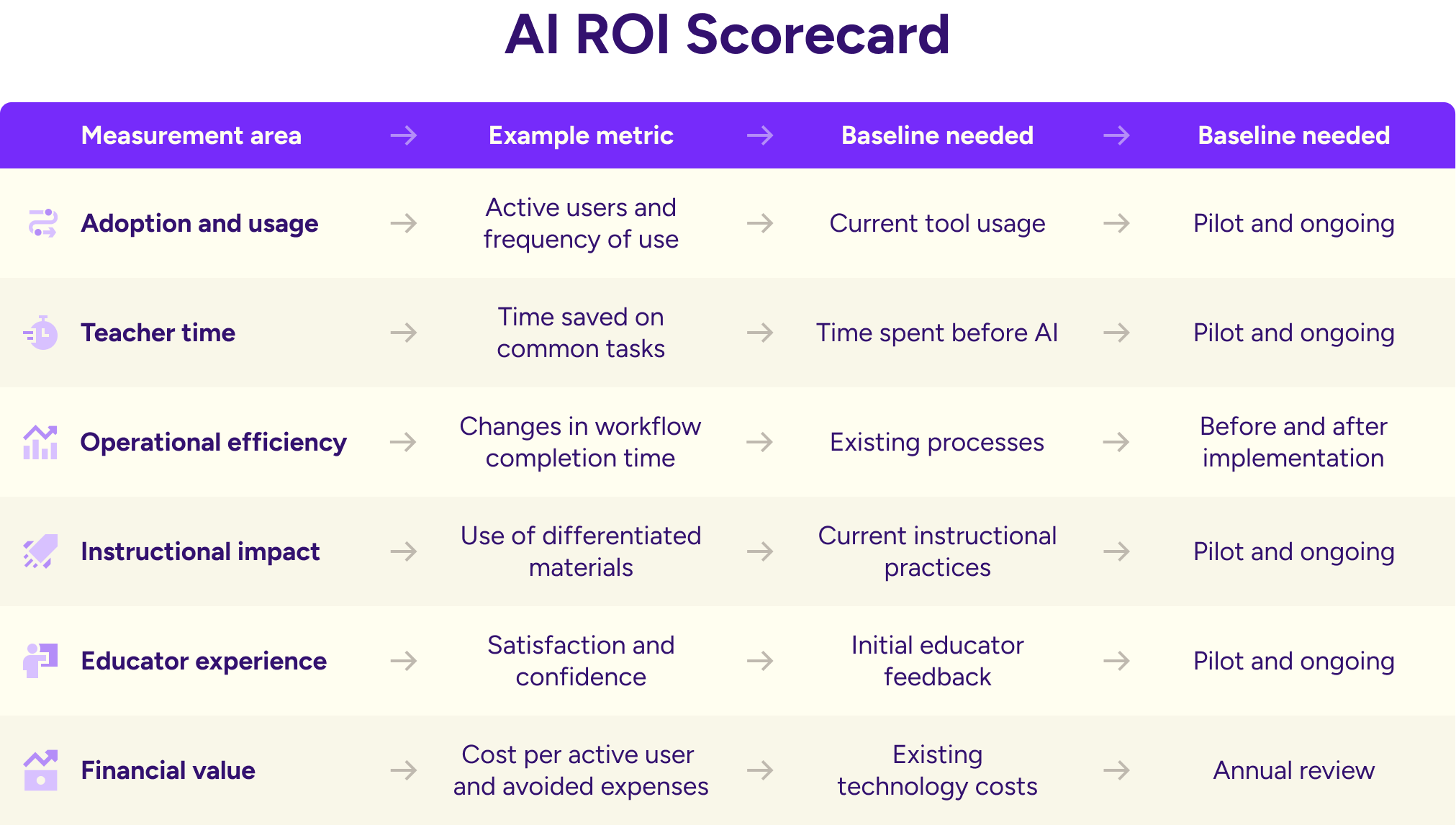
While quantitative data can reveal important trends, the numbers don't always tell the full story. A district might see strong adoption rates, for instance, but still need to understand whether educators find the technology useful in their day-to-day work. Teacher feedback can help explain what's behind the data.
It's also worth looking beyond district-wide averages. Comparing adoption and experiences across schools can reveal where additional training or support may be needed.
Focus on a manageable set of metrics that connect directly to district priorities, and revisit them consistently. Over time, this data can help leaders see where AI is delivering value and where adjustments could make an even greater impact.
How can districts measure the financial and operational return from AI?
To measure the financial and operational ROI of AI in education, districts can look at the time and resources they're saving compared to what they're investing. That includes direct cost savings as well as improvements in how teachers and staff get their work done.
Teacher time is a great place to start. From lesson planning to creating assessments, AI can help educators tackle time-consuming tasks more efficiently. Districts can measure these gains by comparing how long tasks take before and after introducing AI, then checking in with teachers to understand how that time is being used.
And there's real value in giving teachers time back, even when it doesn't translate into a smaller budget. More time to connect with students or focus on instruction can be a meaningful return on its own.
There may be savings elsewhere, too. AI can help streamline administrative work, while a district-wide platform may reduce the need for overlapping technology subscriptions. Reviewing existing tools and how frequently they're used can help leaders spot opportunities to consolidate spending.
To understand the full AI return on investment, districts should also account for what it takes to make the technology successful, including licensing, implementation, and professional learning. These costs provide important context when weighing the benefits.
Together, these measures can help districts see what they're getting from their investment and where there's room to improve.
How should districts measure the impact of AI in education?
To measure the impact of AI in education, districts should look at whether the technology is helping teachers teach and students learn. Educator feedback, classroom observations, and progress toward instructional goals can help leaders understand the difference AI is making.
A good place to start is with the people using it. Teachers can offer valuable insight into how AI fits into their day-to-day work and whether it's helping them meet students' needs. Maybe they're able to create differentiated materials more easily, provide more timely feedback, or spend extra time with students who need support. These experiences can tell us a lot about the value of AI in the classroom.
How teachers use AI matters, too. Two schools might have similar adoption rates but very different experiences. In one, educators may be experimenting with a handful of tools. In another, teachers may be regularly using AI to address specific instructional challenges. Understanding those differences can help district leaders identify promising practices and opportunities for additional support.
And what about students? Depending on the district's goals, leaders can look for signs that AI is helping make learning more accessible or giving students more opportunities to practice and build confidence. Teacher observations and student feedback can add important context to those findings.
Educational outcomes are more complex to measure. Changes in student achievement or engagement rarely come down to a single tool, and some benefits may take longer to emerge. Looking at trends over time can help districts understand where AI may be contributing to progress without overstating its role.
Connecting those findings to real classroom experiences gives districts a stronger understanding of AI impact and how it supports their educational goals.
When should districts measure AI ROI?
Districts should start measuring the ROI of AI in education before implementation and continue as adoption grows. Checking in at different stages helps leaders understand what's working, where educators may need more support, and whether the technology is delivering on its goals.
There's no need to wait until a district-wide rollout to start learning. In fact, some of the most useful insights can come early, when there's still plenty of room to make adjustments.
Here's how measurement can evolve over time.
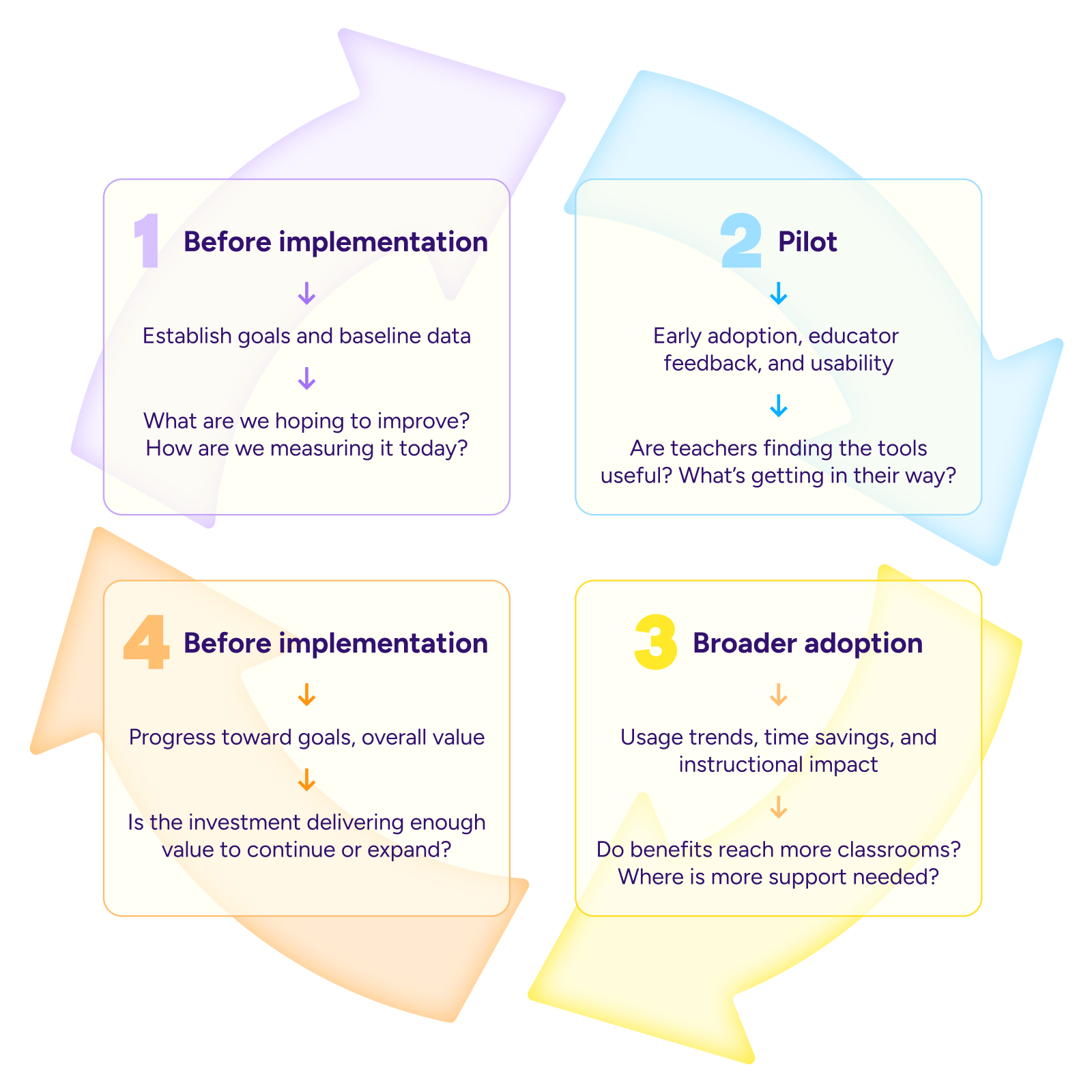
It's worth remembering that different benefits may show up at different times. Teachers might notice time savings within weeks of using a new tool, while changes in instructional practices or student experiences may take longer to understand.
Early results can also point to opportunities for improvement. If adoption is lower than expected, for example, the next step might be to learn more about what's holding teachers back. Additional professional learning or clearer guidance could make a meaningful difference.
Regular check-ins give districts a chance to share progress and adjust their approach before renewal decisions come around. By then, leaders should have a much better sense of the value their investment is delivering.
How can ROI data support future AI investment decisions?
AI ROI data helps districts understand where their investments are paying off and what to do next. Leaders can use those findings to decide which tools are worth expanding, where additional support might help, and when it's time to try something different.
For example, if a pilot shows that teachers are using AI regularly and getting meaningful time back, that could be a good reason to bring the tool to more schools. But what if adoption is lower than expected? Before writing off the investment, it's worth asking teachers what's getting in the way. A little more training or support might make all the difference.
The data can also help districts spot opportunities to simplify their technology stack. If several tools are doing similar things, it may make sense to consolidate and put those resources toward something more useful.
And when it's time to talk about future investments, having evidence to share makes those conversations easier. School boards want to know how district dollars are being spent. Educators want to know whether a tool will actually help them in the classroom. Sharing usage data alongside real teacher experiences can help everyone see the value more clearly.
These findings can also help districts think more broadly about budgeting for AI and where to focus their resources as new tools become available.
How MagicSchool supports measurable AI adoption
Making the most of an AI investment starts with clear goals, the right support, and a way to measure progress.
MagicSchool is built for the realities of K–12 teaching and learning, helping educators save time and better support students. For district leaders, the platform provides visibility into AI adoption and usage across schools, along with the ability to create custom tools that reflect district priorities.
With built-in safeguards, professional learning resources, and ongoing support, MagicSchool helps districts put AI to work with confidence and better understand the value of their investment.
Ready to see what MagicSchool can do for your district? Request a quote to get started.
How long does it take to see ROI from an AI investment?
Districts may see early benefits, such as teacher time savings, within the first few weeks or months. Broader AI impact on instructional practices and student experiences may take longer to measure as adoption grows.
Can teacher time savings be included when measuring AI ROI?
Yes. Teacher time savings are an important part of the ROI of AI’s useage in the classroom, even when they don't translate directly into financial savings. Districts can measure time saved on common tasks and how educators use that time.
How can districts measure AI adoption?
Districts can track active users, frequency of use, and usage across schools to understand adoption. Pairing these AI performance metrics with educator feedback can help show whether teachers are using the tools effectively.
What should districts do if an AI tool is not meeting its expected goals?
Start by gathering educator feedback to understand what's getting in the way. Depending on the findings, districts may need to provide additional training, adjust their implementation approach, or reconsider the investment.